

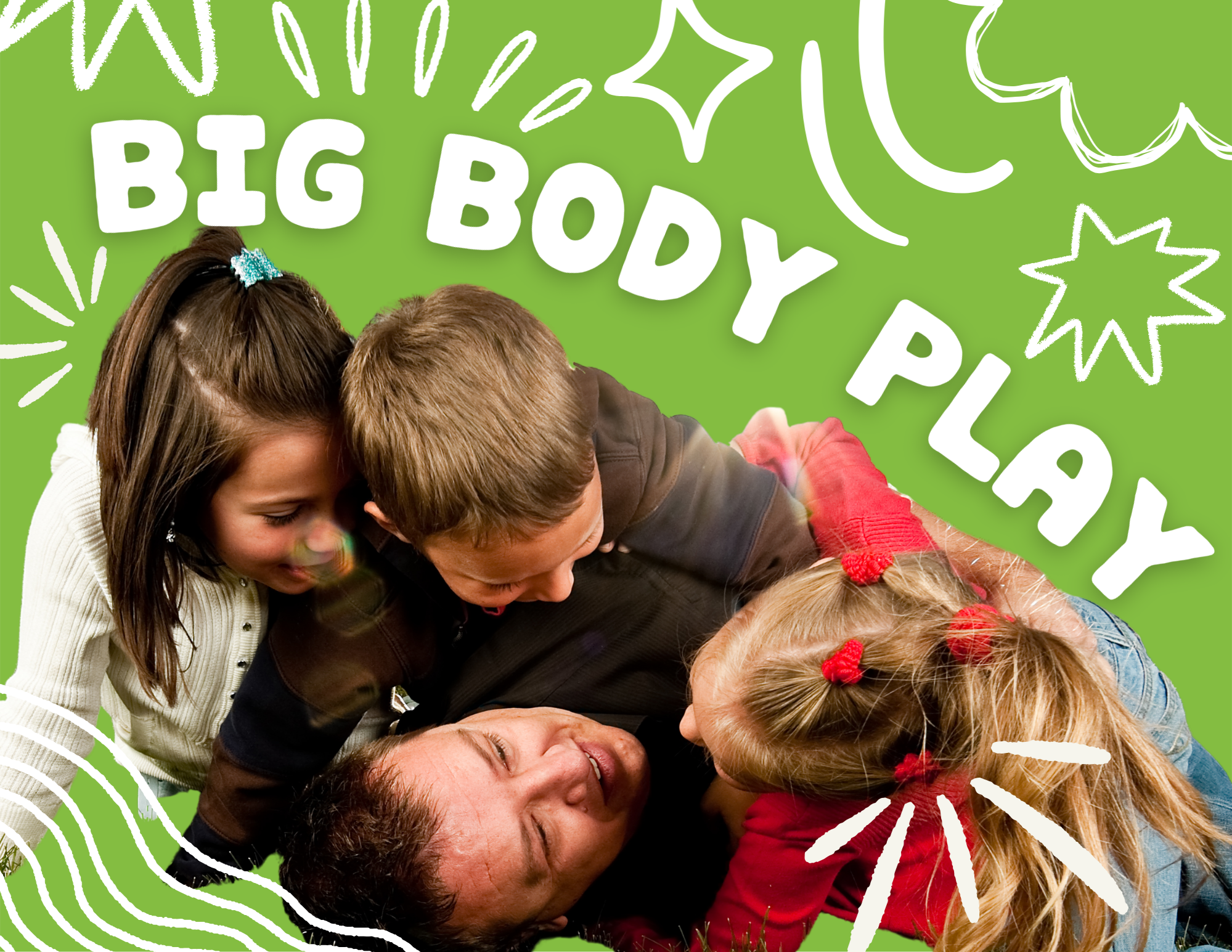
Does your child love wrestling on the living room rug, jumping into your arms, or challenging you to a playful game of chase? While these moments can sometimes feel a little wild, they're actually doing more for your child's development than you might think!
Big Body Play, also known as rough and tumble play, is an important part of childhood that helps children develop gross motor skills, build relationships, and practice managing their emotions. With a little guidance and a few simple boundaries, parents can embrace this meaningful style of play and the countless benefits that come with it.
What Is Big Body Play?
Big Body Play is a type of energetic, physical play that involves moving our bodies in big ways, often while interacting with others. Think wrestling, tumbling, chasing, jumping, and even a good old-fashioned pillow fight!
In her book Big Body Play: Why Boisterous, Vigorous, and Very Physical Play Is Essential to Children's Development and Learning, early childhood expert Frances M. Carlson explores how this type of play supports children's development and why it deserves a place in early childhood experiences.
While Big Body Play can sometimes look rough or chaotic to adults, there's an important difference between playful physical interactions and actual aggression. When children are enjoying themselves, respecting boundaries, and participating willingly, these playful moments can become valuable learning experiences.
What Are the Benefits of Big Body Play for Children?
Big Body Play is about so much more than burning off extra energy! These playful interactions create opportunities for children to practice important skills they'll use throughout their lives.
1. Building Social Skills
When children wrestle, chase, or tumble together, they're learning how to cooperate, take turns, and recognize social cues. They begin to understand when someone is having fun, when a friend needs a break, and how to adjust their behavior to keep the play going.
2. Practicing Emotional Regulation
Big Body Play can bring out big feelings! The excitement of being chased, the frustration of losing a playful wrestling match, or the anticipation of a silly surprise all create opportunities for children to practice managing their emotions.
With guidance from a trusted adult, children can learn to pause, recognize their feelings, and respond appropriately when play becomes too exciting or overwhelming.
3. Developing Physical Skills
All that rolling, jumping, balancing, and tumbling helps children strengthen their muscles, develop coordination, and build body awareness.
These movements also help children explore what their bodies can do and become more confident in their physical abilities.
4. Strengthening Relationships
Some of the most meaningful benefits of Big Body Play happen when parents join in!
Carlson highlights research suggesting that responsive, playful roughhousing between parents and children can support social and language development. When adults smile, laugh, respond to their child's cues, and set appropriate limits, they're helping create positive experiences built on trust and connection.
And the best part? Children are learning all of these skills while having fun with the people they love!
How Can You Tell the Difference Between Play Fighting and Real Fighting?
One of the biggest concerns parents have about rough and tumble play is whether it encourages aggressive behavior.
However, play fighting and real fighting are not the same thing. Carlson explains that there are three important things adults can observe to help distinguish between the two: facial expressions, participation, and the goal of the interaction.
Here's what to look for:
Facial Expressions: During healthy play, children are typically smiling, laughing, and showing enjoyment. When play becomes aggressive, children may appear upset, frightened, or distressed.
Participation: Children who are enjoying themselves willingly participate and often come back for more. If a child tries to leave, pulls away, or asks to stop, it's time to pause.
The Goal: Healthy Big Body Play is about having fun together. Real fighting involves trying to control, hurt, or overpower someone else.
It's important to remember that even playful interactions can become too rough. Adults should stay nearby, pay attention to children's cues, and step in whenever someone appears uncomfortable or unsafe.
The goal isn't to eliminate rough and tumble play. It's to help children learn how to enjoy it safely and respectfully!
How Can Parents Encourage Safe Big Body Play at Home?
Ready to embrace a little more rough and tumble play at home? You don't need special equipment or an elaborate activity planned. A little space, some imagination, and a willingness to get silly are all you need!
Here are five simple ways to get started:
1. Create a Safe Space for Movement
Choose an open area with plenty of room to move. Clear away sharp objects, breakable items, and other hazards so children can explore their movements safely.
2. Set Simple Boundaries
Before the fun begins, establish a few easy-to-follow rules. Remind children that everyone should feel safe, that hitting or hurting others isn't part of the game, and that "stop" always means stop.
3. Follow Your Child's Lead
Every child has a different comfort level with physical play. Some love wrestling and tumbling, while others prefer a playful game of chase. Follow your child's interests and let them help decide how the game unfolds.
4. Model Gentle and Respectful Play
Children learn so much by watching us! Use playful moments to demonstrate how to adjust your movements, take turns, and respect another person's boundaries.
For example, you might say, "That was a big tumble! Are you ready for another turn?" or "You said stop, so I'm going to give your body some space."
5. Make Time to Play Together
Big Body Play doesn't need to last an hour to be meaningful. Even a few minutes of playful movement can create opportunities for laughter, connection, and learning.
10 Fun Big Body Play Activities to Try at Home
Looking for a little inspiration? Here are ten easy ways to bring more movement and playful connection into your family's routine!
Pillow Play: Grab a few soft pillows and challenge your child to a playful pillow fight! Take turns gently tapping each other with the pillows, dodging silly swings, and pausing whenever someone needs a break.
Crawl and Chase: Get down on your hands and knees and let your little one chase you around the room. Then switch roles!
Cushion Obstacle Course: Arrange couch cushions on the floor to create a low-to-the-ground obstacle course for crawling, climbing, and balancing.
Animal Adventures: Pretend to be bears, frogs, or crabs as you move around the room together. Add silly animal sounds for extra giggles!
Flying Airplane: Get ready for takeoff! Lie on your back with your knees bent and invite your child to rest their tummy on your feet. Hold their hands or torso securely as you gently lift them for a short airplane ride! Add some silly twists and turns as you pretend to fly through the sky, keeping your child low and fully supported throughout.
Ball Play: Grab a large, soft ball and have fun rolling, tossing, and gently kicking it back and forth with your child! For an extra challenge, try a playful game of keep-away or take turns chasing the ball around the yard.
Superhero Moves: Let your child's imagination take the lead as you pretend to be superheroes together! Practice jumping over obstacles, crawling under imaginary lasers, and striking your best superhero poses. For extra fun, create a pretend mission where you chase villains, dodge obstacles, and save the day!
Pretend Battle: Grab some soft foam swords or pool noodles and challenge your child to a playful pretend battle! Practice dodging, blocking, and taking turns being the hero or villain. Set simple ground rules, like gentle touches, no hitting faces, and stopping when someone says "stop!"
Push and Pull: Challenge your child to a silly game of pushing against each other's hands while standing face-to-face! See if you can gently push each other backward or hold your ground while practicing balance, coordination, and body control.
Tug-of-War: Grab a soft rope or rolled-up towel and challenge your child to a friendly game of tug-of-war! Practice pulling, balancing, and working together to stay on your feet. For extra fun, switch up the teams and see who can pull the other across a line!
Remember to choose activities that match your child's age, abilities, and comfort level. For babies and younger toddlers, Big Body Play may look more like supported movement, crawling games, and playful interactions on the floor rather than roughhousing.
Let Them Move, Laugh, and Learn!
The next time your child invites you to a wrestling match on the living room rug or challenges you to a game of chase, remember that you're doing more than just playing.
You're helping your child build confidence, practice important social skills, learn about boundaries, and strengthen the special connection you share.
At Balanced Family Academy, we believe that play is one of the most powerful ways young children learn and grow. By embracing safe, playful movement both at school and at home, we can give children even more opportunities to develop the skills they need to thrive.
So, make a little room, get moving, and let the giggles begin!
Research Reference
Carlson, Frances M. Big Body Play: Why Boisterous, Vigorous, and Very Physical Play Is Essential to Children's Development and Learning. 2nd ed., National Association for the Education of Young Children (NAEYC).
Research and concepts referenced throughout this article include distinguishing play fighting from real fighting (pp. 58–60) and encouraging supportive Big Body Play at home (p. 126).